
If you live in Stanislaus County, the name Stanislaus is almost impossible to miss.
It appears on road signs, government buildings, schools, parks, waterways, businesses, and maps throughout California’s Central Valley. There is Stanislaus County, the Stanislaus River, Stanislaus National Forest, Stanislaus State, and countless organizations that carry the name.
But where did the name come from?
The answer leads back to an Indigenous man who lived in California during the early nineteenth century.
Known as Estanislao after his baptism at Mission San José, he was a Lakisamne Yokuts leader who became one of the best-known Indigenous resistance figures in early California history. His story is connected to the mission system, Indigenous resistance, Mexican California, the Central Valley landscape, and the river that eventually carried his name.
The history is complicated. Estanislao lived during a period of enormous cultural and political change, when Indigenous communities throughout California faced the expansion and transformation of the Spanish mission system and later Mexican rule.
In 1828, Estanislao led a revolt involving hundreds of Native Californians who returned to their homeland along the Stanislaus River. The resistance resulted in military confrontations with Mexican authorities. The river later became known as the Río de Estanislao, and the name eventually became associated with Stanislaus County.
Understanding Estanislao’s story therefore means understanding more than one historical figure.
It means understanding the Indigenous communities that lived in the Central Valley before the creation of Stanislaus County.
Who Was Estanislao?
Historical sources identify Estanislao as a member and leader of the Lakisamne Yokuts, an Indigenous community associated with the Stanislaus River region.
The Smithsonian’s National Museum of the American Indian identifies him as a Lakisamne Yokuts man and explains that he served as an alcalde at Mission San José. An alcalde was a Native official within the mission system who was appointed to oversee other Native people.
His original Indigenous name is generally given as Cucunuchi, although historical records and later accounts contain variations in spelling and details concerning his early life.
What is clear is that Estanislao was connected to the Central Valley before and after his time at Mission San José.
His story cannot be separated from the landscape that later became associated with his name.
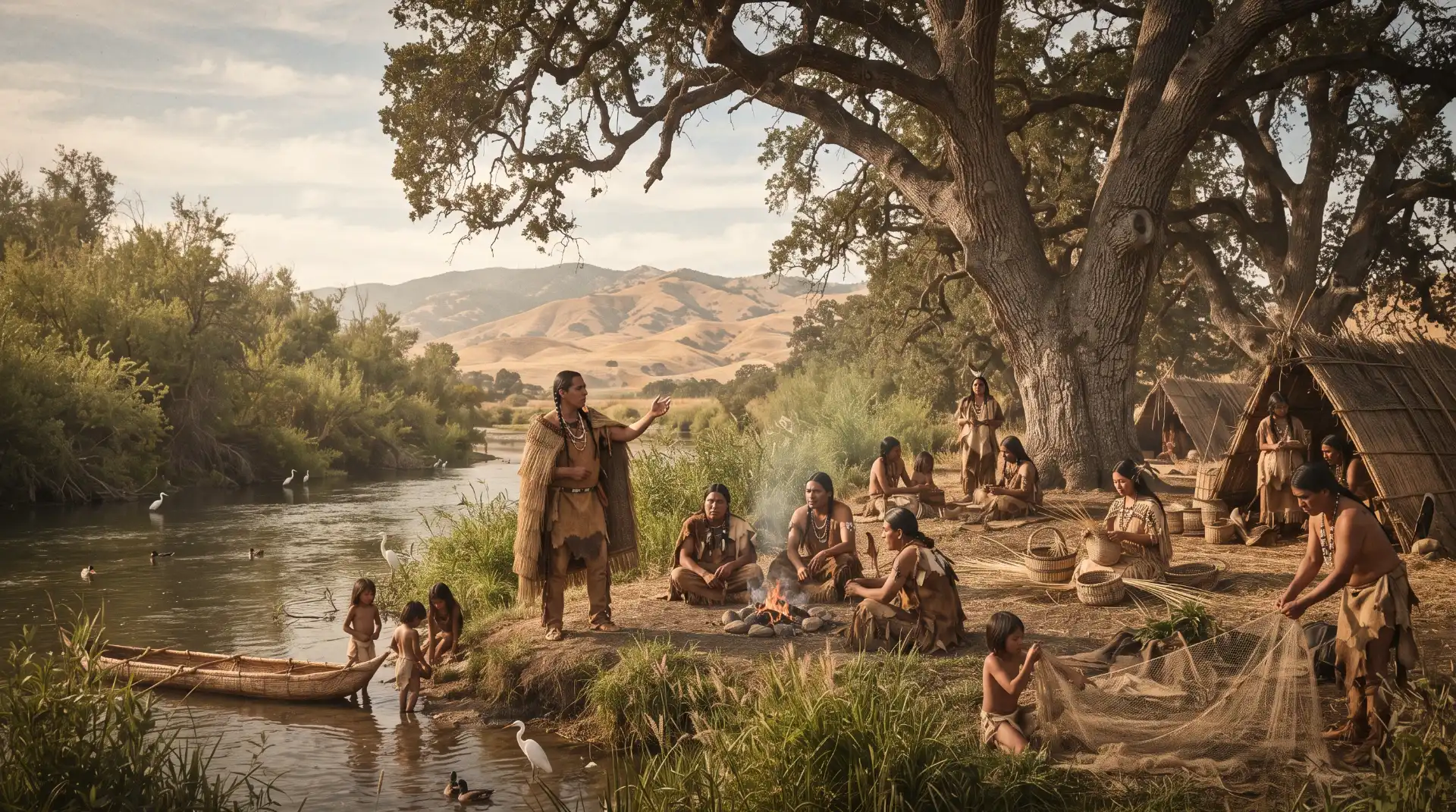
The Stanislaus River and surrounding Central Valley were home to Native communities long before California became part of the United States.
The Yokuts and the Central Valley
To understand Estanislao, it is important to understand the Yokuts people.
The Yokuts were not a single, uniform community. The name refers to numerous Indigenous groups that lived throughout California’s Central Valley and surrounding regions.
Different communities occupied different areas and spoke related languages and dialects.
The Central Valley provided abundant natural resources.
Rivers supplied fish and water. Oak woodlands produced acorns. Wetlands supported wildlife and plant resources. Grasslands and riparian environments offered additional food and materials.
California State Parks notes that Native people had lived for thousands of years along the Stanislaus, Tuolumne, and San Joaquin Rivers and identifies the people of the region as Northern Valley Yokuts. The agency also describes the rivers as important sources of fish, acorns, and game.
This long history is important because the story of Stanislaus County did not begin with the county’s creation.
The region already had its own Indigenous communities, languages, economies, political relationships, and cultural traditions.
Estanislao’s life took place within this much older history.
From Cucunuchi to Estanislao
One of the most important parts of Estanislao’s story is his name.
He was not originally born with the name Estanislao.
Historical sources identify his Indigenous name as Cucunuchi. During his time at Mission San José, he was baptized and given the name Estanislao.
The name was associated with Saint Stanislaus, a Polish Catholic saint.
This naming process reflects the larger history of California’s mission system.
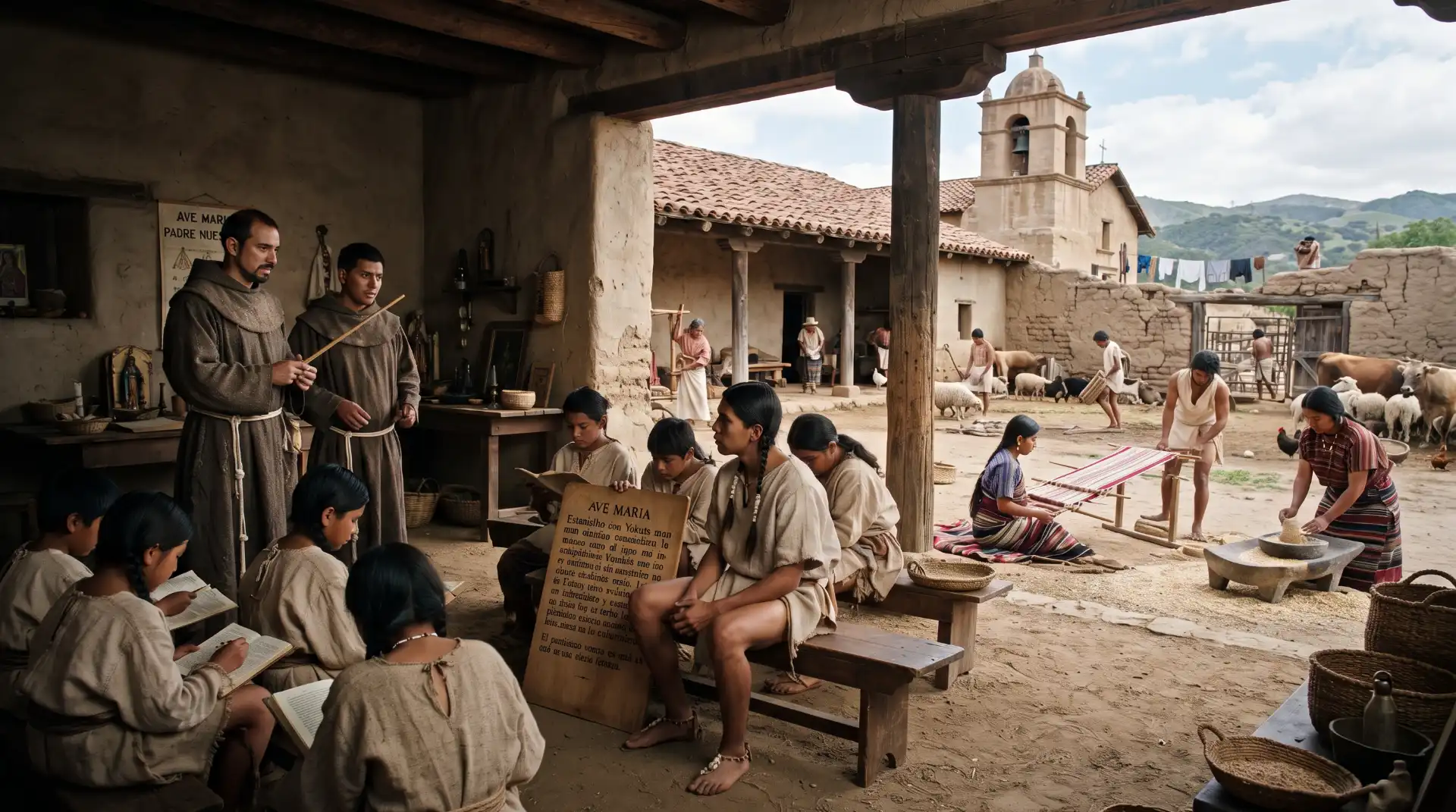
Native people who entered the missions were frequently baptized and assigned Christian names. Their lives within the missions were recorded using these names, which means many Indigenous people are known to history primarily through names assigned to them by missionaries.
The Smithsonian’s National Museum of the American Indian uses the name Estanislao while also identifying him as Lakisamne Yokuts.
For modern readers, this distinction matters.
The name Estanislao is the name through which he became historically famous, but it should not obscure his Indigenous identity or the community from which he came.
Mission San José and Estanislao
Mission San José was established in 1797 in what is now Fremont, California.
During the early nineteenth century, Native people from different communities became part of the mission population.
The National Park Service’s research on California mission populations identifies Estanislao as Cucunuchi, a Yokuts person from the Laquisemnes, who entered Mission San José in 1821 and later became a prominent leader in resistance.
His experience at the mission was significant.
Estanislao learned Spanish and became involved in the mission’s administrative structure. He eventually became an alcalde.
This position placed him in a position of responsibility among Native people within the mission.
Historical accounts portray him as intelligent, capable, and familiar with the military and organizational practices of the mission environment.
That experience would become important later.
What Was an Alcalde?
The word alcalde can be confusing to modern readers.
In the California mission system, Native alcaldes were Indigenous officials who held responsibilities within the mission community.
The position gave certain Native men authority to help manage other Native people under the broader mission administration.
The Smithsonian describes Estanislao as a Mission San José alcalde, explaining that he was a Native official appointed by missionaries to oversee other Native people.
This position placed Estanislao between different worlds.
He was an Indigenous leader living within a Spanish Catholic institution during a period when California was still under Spanish rule and then became part of Mexico after Mexican independence.
The political situation was changing.
The lives of Native Californians were changing with it.
Why Did Estanislao Leave the Mission?
The exact details of Estanislao’s motivations are not fully known.
This is one area where historical sources and later interpretations differ.
The Smithsonian’s educational material describes the 1828 revolt as a return by Estanislao and hundreds of baptized Native Californians to Lakisamne territory, where they resisted mission authority.
Other historical accounts emphasize different factors, including dissatisfaction with mission conditions, resistance to colonial authority, and the desire of Native people to return to their traditional territories.
It is important not to reduce the event to a simple story of one individual becoming a “rebel.”
Estanislao was part of a much broader pattern of Native resistance in California.
Native people throughout the state resisted, negotiated, escaped, returned to their communities, and adapted to the pressures created by colonial institutions.
His story is one particularly well-documented example.
The 1828 Revolt
In 1828, Estanislao left Mission San José and returned toward the Central Valley.
He was joined by other Native people.
The National Park Service’s research describes the revolt as beginning when the Laquisemnes of the lower Stanislaus River failed to return to Mission San José from a visit to their homeland. Other Native people from different mission communities joined them.
The Smithsonian similarly describes Estanislao as leading hundreds of baptized Native Californians back to Lakisamne territory and forming alliances with other Native Californians in the San Joaquin Valley.
The movement quickly became a serious challenge to Mexican authorities.
Estanislao and his allies understood the landscape.
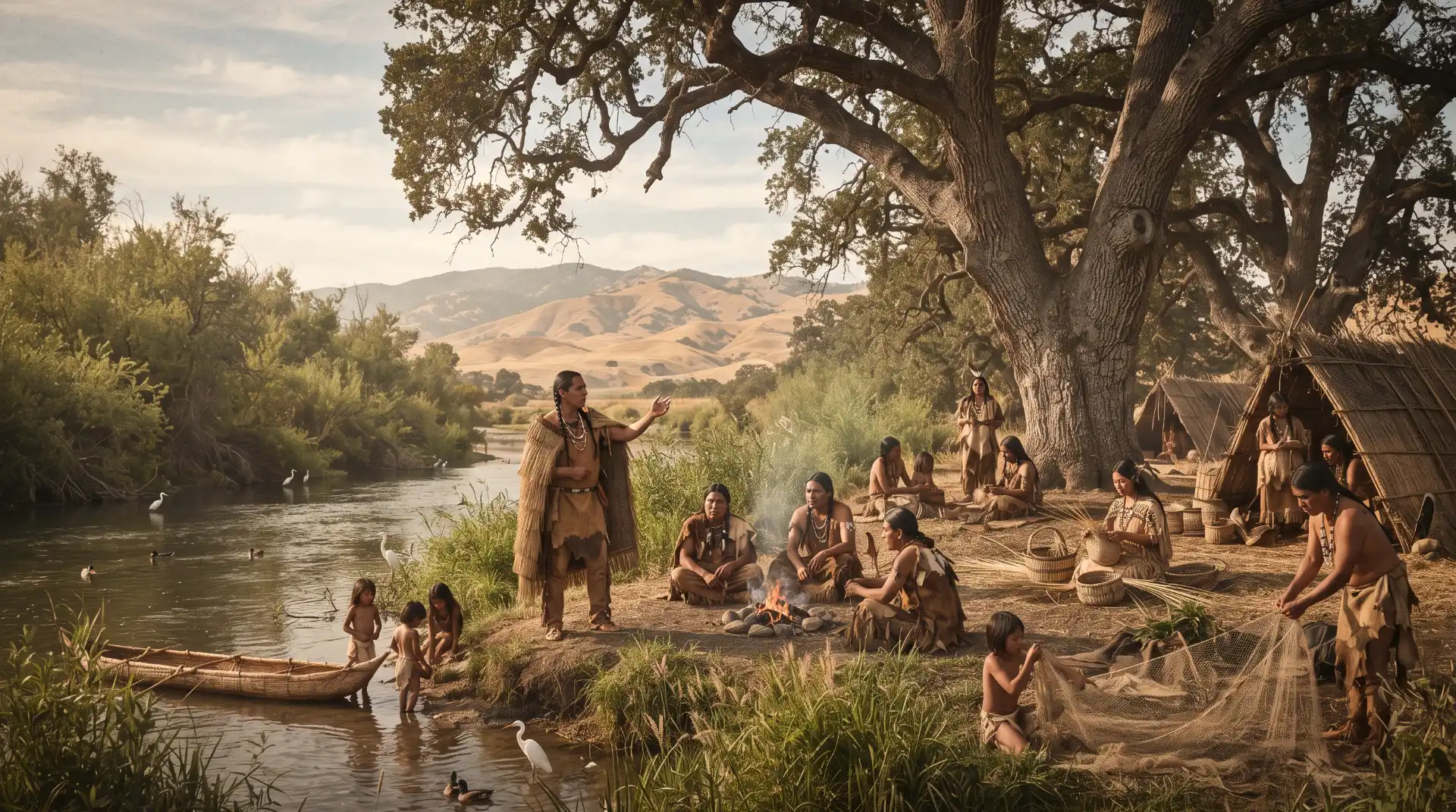
The Central Valley’s rivers, wetlands, oak forests, and open spaces offered advantages to people who knew the region.
Mission and Mexican authorities, by contrast, had to organize military expeditions into territory that could be difficult to navigate.
The Stanislaus River Becomes Central to the Story
The river that now carries the name Stanislaus was an important part of Estanislao’s homeland and the setting of the conflict.
Today, the Stanislaus River runs through several parts of California before reaching the San Joaquin River.
In the early nineteenth century, however, the landscape looked dramatically different.
Large areas of the Central Valley were covered with native grasslands, wetlands, oak woodland, and riparian vegetation.
California State Parks describes the Stanislaus River area as an important Native landscape for thousands of years before European colonization.
The river also became the setting for the confrontation between Estanislao’s forces and Mexican troops.
That conflict eventually helped establish the name that is now familiar across the region.
The 1829 Campaign Against Estanislao
The Mexican government attempted to suppress the resistance.
Military forces were sent against Estanislao and his followers.
The campaign became one of the most notable conflicts involving Native resistance in Mexican-era California.
Historical sources differ in their descriptions of the precise sequence of events and the number of people involved.
However, the broad outline is consistent: Estanislao and allied Native communities resisted Mexican military efforts in the Central Valley, and Mexican forces eventually defeated the resistance.
California State Parks describes Estanislao as leading an uprising against the Mexican army in 1829 and states that Mexican forces eventually defeated him and his followers after multiple attempts.
The Smithsonian’s educational material similarly describes multiple attacks and identifies Estanislao’s movement as an organized Native resistance to mission authority.
The Battle and Its Historical Location
The exact location of the major 1829 confrontation has been debated by historians.
A 1976 publication of the Stanislaus County Historical Society noted that earlier accounts had sometimes placed the battle incorrectly and discussed research based on Spanish-language documents. The society concluded that the battle occurred on the south bank of the river, probably in the general area between present-day Salida and Ripon.
This is an important reminder about historical research.
Local legends sometimes become accepted as fact after being repeated for many years.
Historians must return to original records and compare sources to determine what can be established with confidence.
The location of the conflict is therefore an example of why Stanislaus County history continues to require research.
Estanislao Was Not Simply a Legend
Over the years, Estanislao became the subject of colorful stories.
Some nineteenth- and twentieth-century accounts presented him as a dramatic frontier character.
Later popular histories sometimes compared him to other famous California figures or emphasized stories about his military abilities.
Those stories are part of the history of how Americans remembered Estanislao, but they should be distinguished from the historical record.
Modern historical interpretation places greater emphasis on his identity as an Indigenous leader and on the colonial circumstances surrounding the revolt.
The Smithsonian’s National Museum of the American Indian is especially useful here because its educational materials place Estanislao within the larger history of Native resistance and resilience during California’s mission period.
That context changes the way his story can be understood.
Rather than simply asking whether Estanislao was a “hero” or “rebel,” historians can ask what conditions shaped his decisions and what his resistance meant to the Native communities involved.
Estanislao and Native Resistance
Estanislao’s revolt was not an isolated event.
Native resistance occurred throughout California during the mission and Mexican periods.
People resisted mission control in different ways.
Some escaped.
Others refused to return.
Some maintained connections with communities outside the missions.
Others negotiated with mission authorities or participated in the mission system while maintaining Indigenous cultural identities.
The National Park Service’s research describes the 1828 movement as involving Native people from several mission communities and different areas of the Central Valley.
This makes Estanislao’s story part of a much broader history.
His leadership was significant, but he was not acting alone.
What Happened After the Revolt?
Estanislao’s later life is less clearly documented than the famous period of his revolt.
Historical accounts indicate that he eventually returned to Mission San José.
The precise circumstances and timing of his return are described differently by different sources.
He is generally understood to have returned to the mission in the 1830s.
Some accounts indicate that he lived there again and worked within the mission community.
He died in 1838.
This later period is important because it shows that his life cannot be reduced to the years of conflict.
He was a person who lived through several dramatically different stages of California history.
He experienced Indigenous community life, mission life, resistance, military conflict, and a return to the mission environment.
The Name Estanislao Spreads Across California
The most visible legacy of Estanislao is the name itself.
The river became known as the Rio de Estanislao.
California State Parks explains that following the 1829 conflict, the river became known as “Rio de Estanislao” in recognition of the leader.
Over time, the name became firmly established on maps and in geographic records.
When Stanislaus County was later established, the county inherited the river’s name.
This means the name found on today’s county government offices, maps, highways, schools, and other institutions ultimately traces back to an Indigenous man living in California more than two centuries ago.
From River Name to County Name
Stanislaus County was established in 1854.
By that point, the name Stanislaus had already become associated with the river.
The county’s adoption of the name demonstrates how geographic names can preserve earlier layers of history.
Today, someone driving across Stanislaus County may see the name without knowing its origins.
The name appears so frequently that its history can become invisible.
Yet behind it is the story of an Indigenous leader and the communities of the Central Valley.
That is one of the most interesting aspects of local geography.
Place names can function as historical records.
Why the Name Matters Today
Understanding the origin of the name Stanislaus can change how residents see the county.
The name is not simply a reference to an old Spanish or Catholic figure.
It is connected to an Indigenous man whose life became intertwined with the mission system and Native resistance.
His Indigenous identity is central to the story.
The Smithsonian explicitly identifies Estanislao as Lakisamne Yokuts and places his story within the broader history of California Native American survival and resistance.
For residents of Modesto, Ceres, Turlock, Riverbank, Oakdale, Patterson, Newman, and other communities, this history provides an opportunity to learn more about the land beneath the modern Central Valley.
The Stanislaus River Today
The river associated with Estanislao remains one of the most important geographic features in the region.
Modern residents experience it differently from the people who lived there in the early nineteenth century.
Today, the river supports recreation, agriculture, wildlife habitat, and communities.
California State Parks’ Caswell Memorial State Park protects a section of mature oak riparian forest along the Stanislaus River near Ripon. The park’s historical information specifically discusses the Native history of the river and Estanislao’s 1829 resistance.
The landscape therefore provides a physical connection to the history.
Visitors walking beneath the oak trees or along the river can be standing in an environment connected to the Indigenous communities who lived there for generations.
Caswell Memorial State Park and Estanislao’s Story
Caswell Memorial State Park is particularly relevant to Stanislaus County history.
The park is located near Ripon along the Stanislaus River.
Its mature riparian forest provides an idea of what portions of the Central Valley landscape looked like before extensive agricultural and urban development.
The park’s historical interpretation recognizes the Indigenous people who lived along the rivers and the significance of Estanislao’s resistance.
This makes the area valuable not only for recreation but also for understanding local history.
The natural landscape can help visitors imagine the Central Valley before highways, subdivisions, irrigation canals, and modern agricultural infrastructure transformed much of the region.
The Mission Period and Its Human Cost
Estanislao’s story also requires an honest discussion of the mission system.
California’s missions are important historical sites, but the mission period was deeply disruptive for Native communities.
Native people were subjected to major changes in their lives, including changes in settlement patterns, labor, religion, food systems, and cultural practices.
Disease also had devastating effects.
California State Parks notes that the Yokuts population declined during the 1830s due to disease, harsh mission conditions, and conflict. The agency specifically identifies a severe malaria outbreak in 1833 and a later smallpox epidemic.
These events help explain the broader environment in which Estanislao lived.
His resistance occurred during a period when Native communities faced enormous pressures.
Why Historical Sources Sometimes Disagree
Anyone researching Estanislao will quickly discover that sources do not always agree.
Some accounts differ about his birth date, exact tribal affiliation terminology, the number of people who followed him, the sequence of battles, and the precise location of events.
This is not unusual in early California history.
Many records were written by missionaries, military officers, government officials, or later historians rather than by Indigenous people themselves.
That creates limitations.
The historical record reflects the people who documented events and the purposes for which they were writing.
Modern historians therefore compare Spanish-language documents, mission records, military reports, Indigenous histories, archaeological evidence, and later scholarship whenever possible.
For a local-history website, acknowledging these uncertainties is better than presenting every traditional story as unquestioned fact.
Estanislao’s Place in Stanislaus County History
Estanislao occupies a unique position in local history because his name became part of the geography.
Many historical figures are remembered through statues, buildings, books, or monuments.
Estanislao is remembered every day through a county and river that carry a form of his baptismal name.
That makes his story unusually visible.
Yet the person behind the name can remain surprisingly unknown.
Someone may live in Stanislaus County for decades without learning that the county’s name is connected to an Indigenous leader from the Central Valley.
Learning this history adds another layer of meaning to the local landscape.
Teaching Estanislao’s Story to Students
Estanislao’s history can also provide a valuable topic for California students.
Students can examine how geographic names preserve history.
They can compare mission records with modern historical interpretations.
They can research the Yokuts and other Indigenous communities of the Central Valley.
They can investigate how the Stanislaus River has changed over time.
They can study maps to understand how the region developed.
They can also explore the difference between primary sources and later interpretations.
These activities encourage students to understand history as an ongoing process of research rather than simply a list of dates.
Questions Students Can Ask
A student researching Estanislao might begin with a simple question:
Why is Stanislaus County called Stanislaus?
That question can lead to others.
Who was Estanislao?
What was his Indigenous name?
Which community did he belong to?
What was Mission San José?
What was an alcalde?
Why did he leave the mission?
Who joined him?
Where did the resistance occur?
How did the Mexican government respond?
How did the Stanislaus River receive its name?
Why did the county later use that name?
What happened to the Indigenous communities of the region?
These questions can turn one place name into an entire research project.
Remembering Estanislao Beyond the Legend
The most meaningful way to remember Estanislao is to place his life within its historical context.
He was an Indigenous man living during a period of enormous change.
He became part of the Mission San José system, learned Spanish, and became an alcalde.
He later left the mission and returned to the Central Valley with other Native people.
His resistance challenged Mexican military authority.
The river associated with his homeland became known as the Río de Estanislao.
Eventually, that name became the name of a California county.
His story therefore connects Indigenous California, the mission period, Mexican California, Central Valley geography, and modern Stanislaus County.
The Indigenous History Behind a Familiar Name
For many residents, “Stanislaus” is simply a familiar word.
It is the name of the county they call home.
It appears on school district names, government documents, sports teams, businesses, highways, maps, and community organizations.
But the name has a history.
That history reaches back to an Indigenous community living along the Central Valley rivers and to a man whose life became entangled with the mission system.
The name Estanislao was given to him through baptism, yet that name ultimately became attached to one of the major geographic features of California’s Central Valley.
His story reminds us that the landscape around Stanislaus County contains layers of history that existed long before modern cities were built.
Preserving Indigenous History in Stanislaus County
Preserving local history means preserving Indigenous history as well.
The history of Stanislaus County should not begin with the arrival of American settlers or the county’s creation in 1854.
The region has a much older Indigenous history.
The Yokuts and other Native communities lived in the Central Valley for thousands of years.
Their relationships with rivers, oak forests, wetlands, animals, plants, and neighboring communities shaped the landscape long before California became part of the United States.
Estanislao’s story provides one window into that larger history.
It should not be treated as the entire history of Indigenous people in the region.
Instead, it is one chapter within a much larger story of Native California.
What Estanislao’s Legacy Means Today
Estanislao’s most visible legacy is geographic.
His name remains attached to the river and county.
But his deeper historical legacy is connected to the survival and resistance of Native Californians.
His story shows that Indigenous people were active participants in California’s history.
They made decisions, formed alliances, resisted authorities, adapted to changing circumstances, and maintained connections to their communities.
They were not simply passive subjects of the historical events surrounding them.
Estanislao’s life illustrates that reality.
Conclusion
Who was Estanislao?
He was a Lakisamne Yokuts Indigenous leader whose life unfolded during one of the most complicated periods in California history.
Born with the Indigenous name Cucunuchi, he later received the name Estanislao at Mission San José. He became an alcalde within the mission system and eventually left the mission, returning to his homeland along the Central Valley’s rivers.
In 1828, he led a major Native resistance movement involving hundreds of Indigenous people. The following year, Mexican military forces confronted Estanislao and his allies along the river that would later bear his name. California State Parks identifies the 1829 conflict as the event after which the river became known as the Rio de Estanislao.
The name survived.
The river became the Stanislaus River.
The surrounding county became Stanislaus County.
Today, millions of people encounter the name without necessarily knowing the story behind it.
Learning that story provides an opportunity to look at Stanislaus County differently.
The next time you see the word Stanislaus, remember that it represents more than a county or river. It connects modern California to the Indigenous history of the Central Valley and to the life of a Lakisamne Yokuts leader whose resistance became part of the region’s historical record.
For Stanislaus County residents, understanding that connection is an important part of understanding the place they call home.